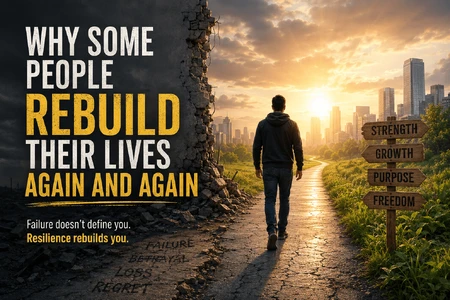
Why Some People Rebuild Their Lives Again and Again
Failure affects people differently.
For some, repeated setbacks become permanent emotional wounds. A broken relationship, financial collapse, addiction, betrayal, or public humiliation can slowly convince someone that they are incapable of change.
But others continue rebuilding their lives despite devastating hardships.
Why?
The answer lies in resilience psychology, adaptability, and the survival mindset developed through adversity. Reinvention is rarely about being fearless or endlessly optimistic. More often, it is about learning how to survive emotional pain without allowing it to define your identity.
This article explores the hidden psychology behind rebuilding yourself after repeated failure and the lessons people can learn from emotional endurance.
Failure Does More Than Hurt — It Changes Identity
Repeated failure does not only damage confidence; it can reshape identity.
Instead of saying, “I failed,” many people eventually begin believing, “I am a failure.”
This psychological shift is dangerous because identity-driven shame often stops people from trying again. Research shows that individuals recover faster when they treat failure as a temporary experience rather than a permanent reflection of self-worth.
Reinvention begins when someone refuses to let pain become their identity.
Resilience Is Built Through Hardship
Resilient People Are Not Fearless
One common myth is that resilient people are naturally positive or emotionally strong.
In reality, most resilient individuals have experienced deep pain, instability, rejection, or loss. What separates them is their ability to adapt despite emotional discomfort.
People who repeatedly rebuild themselves often develop:
- Emotional flexibility
- Stronger coping skills
- Problem-solving abilities
- Increased self-reliance
- Higher tolerance for uncertainty
Hardship can become psychological training for survival.
Survival Mode Can Create Unexpected Strength
Adversity Changes the Way People Think
People who survive repeated chaos often become highly adaptable because they are forced to adjust constantly.
Over time, they may develop:
- Emotional endurance
- Reduced fear of starting over
- Greater resourcefulness
- Confidence based on survival
A person who has rebuilt their life multiple times learns an important truth:
“I can survive difficult things.”
That mindset creates mental toughness that success alone often cannot provide.
Why Rock Bottom Often Leads to Reinvention
Crisis Forces Identity Reconstruction
Many major life transformations happen after emotional collapse.
When careers fail, relationships end, or stability disappears, people are often forced to reevaluate who they are and what patterns are damaging their lives.
This process is painful, but it also creates space for change.
Sometimes failure destroys an unhealthy identity so a stronger one can emerge.
Reinvention vs. Escapism
Not every major life change is true growth.
Some people constantly switch jobs, relationships, or environments without addressing deeper emotional patterns.
Healthy Reinvention Includes:
- Accountability
- Self-awareness
- Emotional growth
- Breaking toxic cycles
- Building healthier habits
Escapism Often Includes:
- Running from discomfort
- Blaming others
- Repeating the same mistakes
- Avoiding self-reflection
Real reinvention requires internal change, not just external movement.
Adaptability Is the Real Superpower
People who successfully reinvent themselves are rarely perfect.
They are adaptable.
Adaptable individuals recover faster because they accept change, adjust strategies, and continue moving forward after setbacks.
Instead of viewing change as failure, they see it as evolution.
This flexibility becomes essential after repeated hardship.
Practical Lessons for Rebuilding Yourself
1. Separate Your Identity From Your Failures
Your past experiences explain part of your story, but they do not permanently define your future.
2. Focus on Small Wins
Confidence is rebuilt through consistent small actions, not dramatic overnight change.
3. Learn Emotional Endurance
Growth requires tolerating uncertainty, rejection, and discomfort without giving up.
4. Change Your Internal Narrative
The stories people repeat to themselves shape identity.
Replace:
- “I always fail”
With:
- “I am still capable of growth.”
5. Build Systems Instead of Relying on Motivation
Healthy routines, support systems, therapy, and discipline help people continue rebuilding even when motivation fades.
Conclusion: Reinvention Is Proof of Human Strength
Repeated failure can leave deep emotional scars, but humans are remarkably capable of rebuilding themselves.
The people who reinvent their lives after devastating setbacks are not superhuman. Often, they are individuals who learned through hardship that survival itself creates strength.
Failure does not always destroy identity.
Sometimes it becomes the beginning of transformation.
Call to Action
If you are rebuilding after failure, remember that starting over is not weakness—it is resilience in action.
Take small steps, learn from the past, and allow yourself to grow beyond the version of you that pain tried to define.